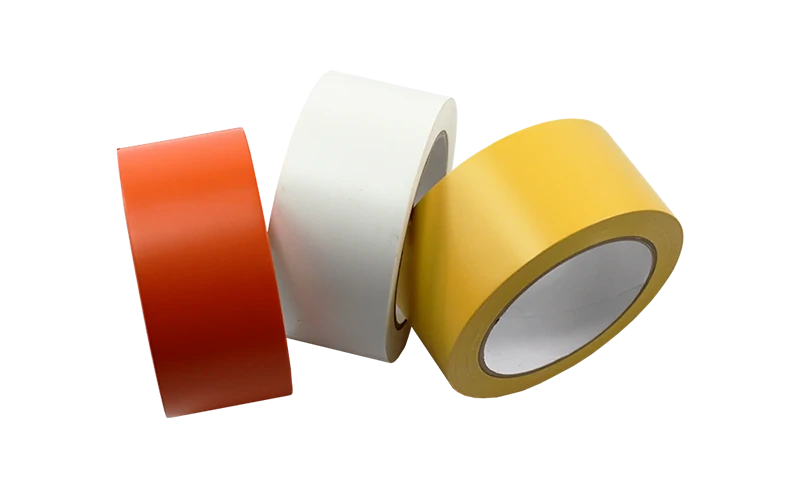
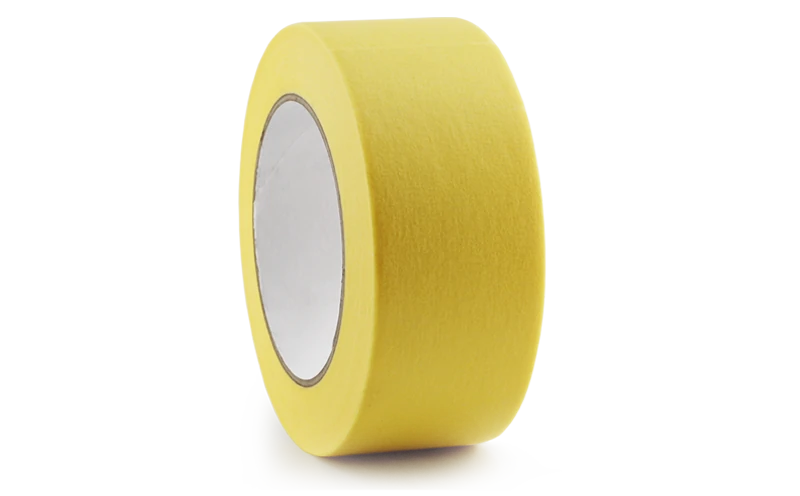
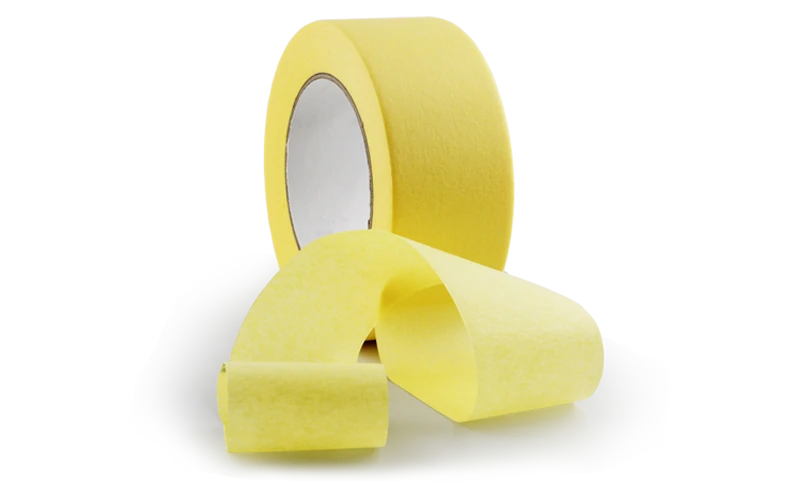
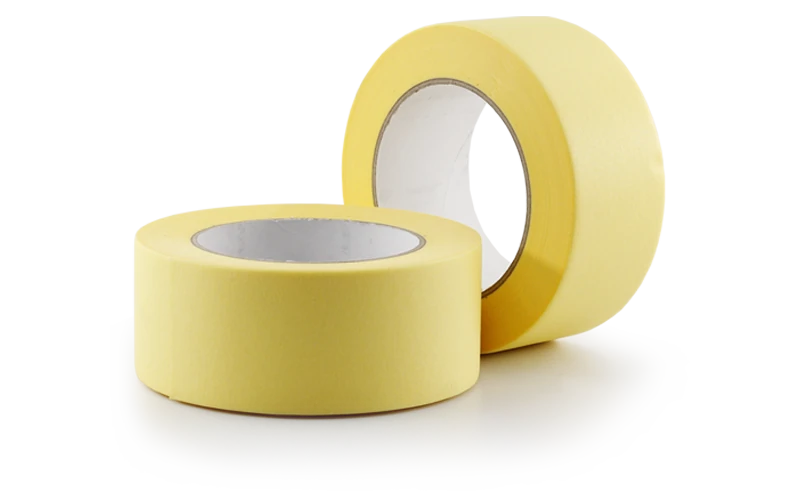
Crepe Masking Tape (No. 503) is a professional-grade, high-conformability paint masking solution engineered with a heavy, structured yellow crepe paper backing. Coated with an advanced water-based acrylic pressure-sensitive adhesive, this versatile masking tape is uniquely designed to flex, stretch, and hug irregular, curved, or multi-textured surfaces effortlessly. Delivering a balanced medium-adhesion hold, it creates an impenetrable barrier against paint bleed, overspray, and ambient dust, while guaranteeing a clean, damage-free removal up to 21 days post-application.
| Performance | ||
|---|---|---|
| Units | Measurements | |
| Thickness | um | 140 |
| Adhesion | N/25mm | 2.5-3.0 |
| Share Strength | N/10mm | 29-32 |
Standard flat paper tapes frequently tear, crimp, or lift away when applied to architectural curves, uneven masonry, or complex automotive panels, leaving underlying surfaces vulnerable to costly paint leaks. Our premium Crepe Masking Tape solves this challenge through its heavily textured, high-caliper crepe paper tape construction. The deliberate mechanical texturing built into the yellow paper carrier provides built-in elongation properties. This elasticity allows the tape to be stretched, routed, and wrapped around intricate contours—such as conduits, piping, corrugated walls, window casings, and structural steel—without puckering or snapping under tension.
At a functional thickness of 140 microns (140µm), this tape provides an excellent mechanical shield that successfully resists airborne overspray, abrasion, and fluid penetration. The engineered water-based acrylic adhesive system delivers an instant tack of 2.5–3.0 N/cm onto a diverse grid of standard substrates, matching the performance of traditional solvent formulas while remaining eco-friendly. Furthermore, the adhesive matrix is inherently resilient against moisture vapor, baking chamber heat, and ambient UV light exposure, meaning it will not bake into surfaces or leave brittle, gummy adhesive residues behind even after remaining applied indoors for up to 3 weeks.
This multi-surface masking tape is engineered for universal application across professional architectural, construction, and manufacturing finishing workflows:
Q1: Why is crepe paper preferred over flat paper for masking irregular surfaces?
A: Flat paper has almost no elasticity and will wrinkle, fold, or rip if forced onto a curve. Crepe paper tape undergoes a specialized crinkling process during manufacturing, which gives it a built-in mechanical stretch. This unique structure allows it to expand on the outer edge of a curve and contract on the inner edge, sealing tightly onto uneven surfaces without lifting.
Q2: Will this Crepe Masking Tape leave adhesive residue if left on for multiple days?
A: No, provided it is used within its specifications. Our No. 503 tape is designed for up to 21 days of clean removal indoors. The water-based acrylic adhesive is highly resistant to degradation from UV rays and ambient heat, ensuring it peels away cleanly in one piece without tearing or leaving sticky residue.
Q3: Is this masking tape compatible with industrial paint drying ovens?
A: Yes. The tape is specifically engineered to handle industrial painting workflows. It performs reliably across drying cycles that transition from standard ambient air drying all the way up to controlled oven-bake conditions without cracking, drying out, or lifting at the borders.
Q4: Is the water-based adhesive safe for delicate substrates?
A: Our water-based acrylic adhesive is formulated to provide a medium adhesion level (2.5–3.0 N/cm to steel). This provides a reliable hold on standard construction materials like glass, wood, metal, tiles, and floors, while remaining balanced enough to remove safely without surface damage. However, for extremely fresh, un-cured coatings or delicate wallpapers, we recommend testing a small inconspicuous area first.