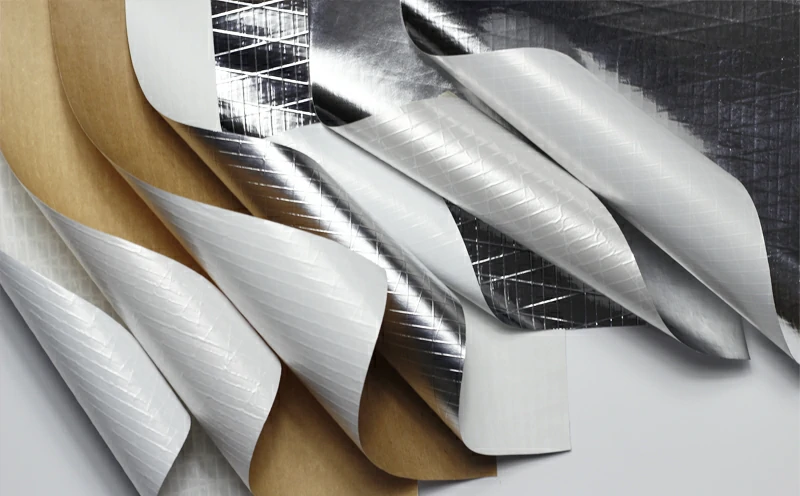
Selecting the right insulation facing is just as important as choosing the insulation itself. Whether you're specifying materials for HVAC systems, commercial building insulation, or industrial mechanical insulation, the facing material protects the insulation, maintains thermal efficiency, and serves as the system's first line of defense against moisture and physical damage.
Among the most widely used insulation facings are FSK (Foil Scrim Kraft) and ASJ (All Service Jacket). Although both function as protective insulation jackets and vapor barriers, they are designed for different environments and applications. Choosing the wrong facing can lead to moisture intrusion, reduced insulation performance, higher maintenance costs, and an unattractive finished installation.
This guide explains FSK vs ASJ, compares their construction, performance, appearance, applications, and sealing methods, and helps contractors, engineers, insulation distributors, and HVAC professionals determine which solution is best for their projects.
What Is FSK (Foil Scrim Kraft)?
FSK (Foil Scrim Kraft) is a reinforced insulation facing widely used throughout commercial HVAC systems and industrial thermal insulation.
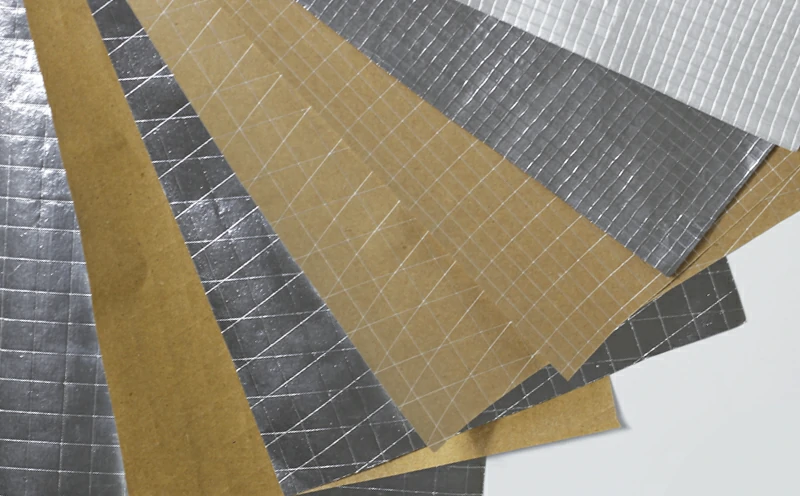
As its name suggests, Foil Scrim Kraft combines three laminated materials into one durable facing:
- Aluminum foil outer layer
- Fiberglass scrim reinforcement
- Kraft paper backing
Each layer serves a specific purpose.
The aluminum foil reflects radiant heat while acting as an effective moisture barrier. The fiberglass scrim provides exceptional tensile strength, puncture resistance, and dimensional stability. The kraft paper gives the laminate flexibility and allows it to bond securely to fiberglass insulation products.
The result is an extremely durable FSK Insulation Facing capable of protecting insulation in demanding environments.
Why Is FSK So Popular?
FSK has become the industry standard because it offers an excellent balance of durability, thermal performance, and cost efficiency.
Key advantages include:
- Outstanding vapor barrier performance
- High tear and puncture resistance
- Excellent moisture protection
- Reflective aluminum surface that reduces radiant heat transfer
- Long service life
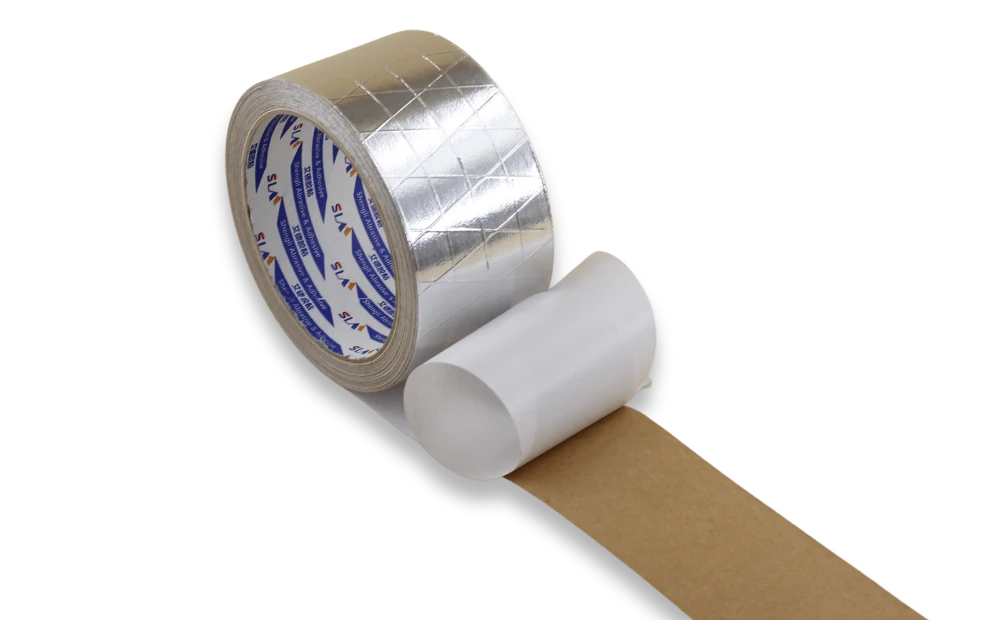
- Easy sealing with matching FSK Tape
Because of these characteristics, FSK is commonly used wherever insulation may experience temperature fluctuations, humidity, or mechanical wear.
Typical Applications of FSK Insulation Facing
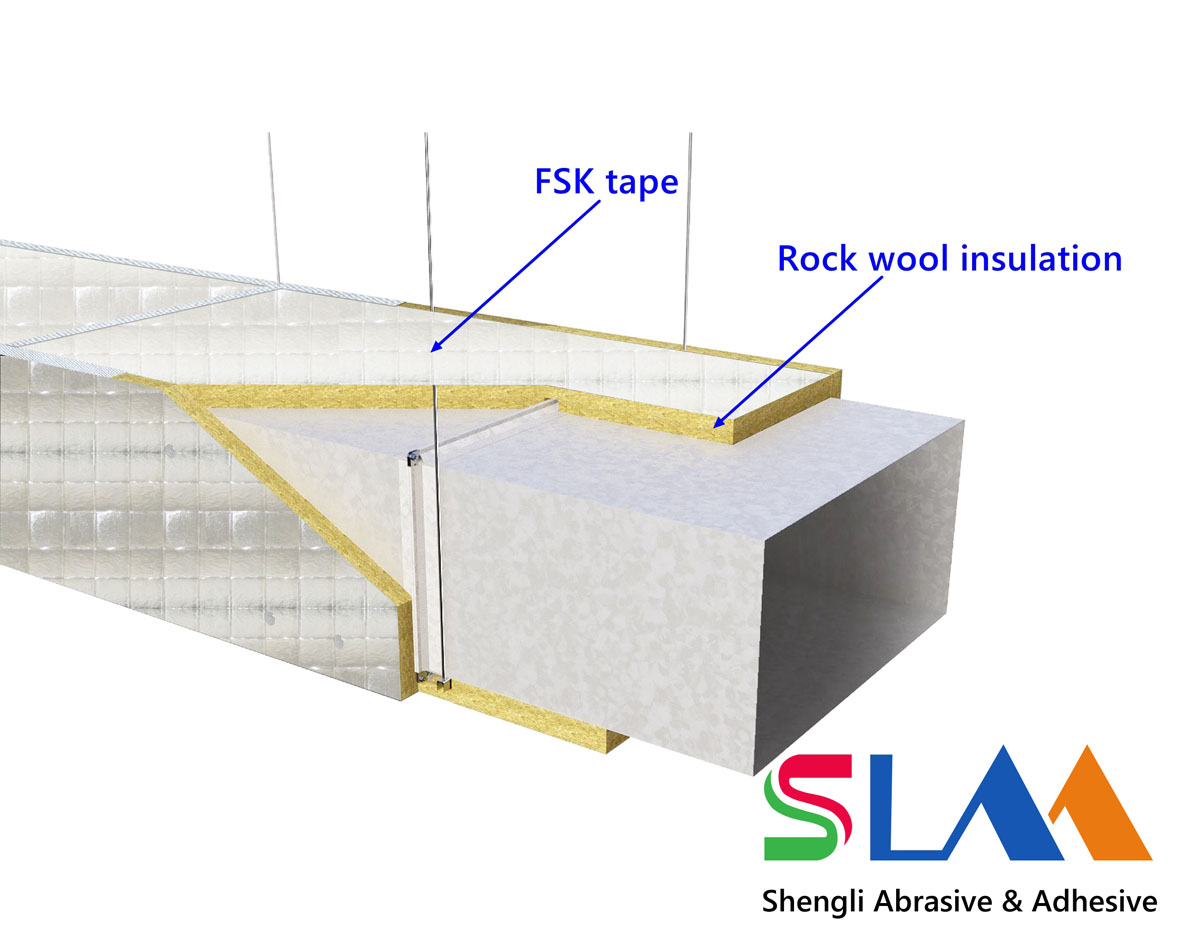
FSK is the industry standard for air duct insulation and wrapping a fiberglass duct board. Because of its metallic appearance, it is ideal for concealed spaces such as attic spaces, crawl spaces, and dedicated mechanical rooms.
What Is ASJ (All Service Jacket)?
ASJ (All Service Jacket) is another widely used insulation facing designed primarily for insulated piping and exposed mechanical systems.
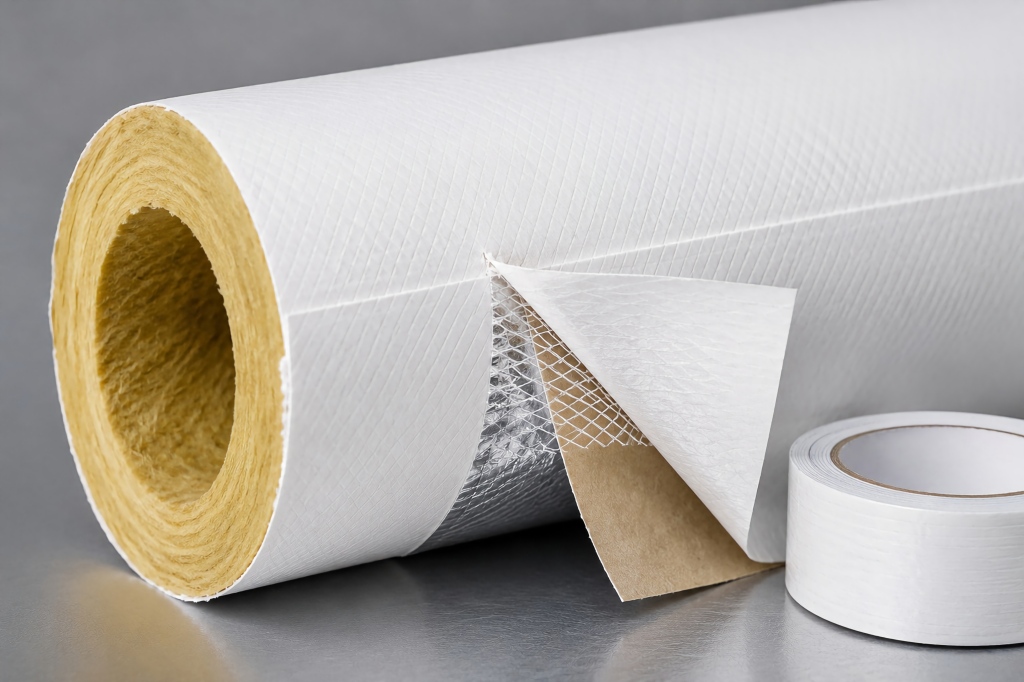
Unlike FSK, All Service Jacket features a clean white exterior that provides both protection and an attractive finished appearance.
A typical ASJ Insulation Facing consists of:
- Bleached Kraft Paper: The outermost layer creates a clean, white professional finish.
- Fiberglass Scrim: Provides physical reinforcement against tearing.
- Foil or Metalized Polyester Film: Located on the interior side to deliver premium vapor barrier protection.
Although its internal construction differs slightly from FSK, ASJ still delivers excellent vapor-retarder performance while emphasizing aesthetics.
Typical Applications of ASJ Insulation Facing
ASJ is favored for exposed mechanical piping and duct networks inside occupied commercial buildings. If insulation runs through a school hallway or a modern office, ASJ provides a polished look that requires no additional painting.
Because the jacket remains visible, ASJ is frequently selected for projects where appearance is nearly as important as insulation performance.
FSK vs ASJ: Quick Comparison
Before exploring each characteristic in detail, the following table summarizes the major differences.
| Feature | FSK (Foil Scrim Kraft) | ASJ (All Service Jacket) |
|---|---|---|
| Surface Finish | Reflective aluminum foil | Smooth white finish |
| Primary Purpose | Durable HVAC insulation facing | Attractive pipe insulation jacket |
| Construction | Foil + Fiberglass Scrim + Kraft Paper | White outer layer + Scrim + Vapor Barrier |
| Appearance | Industrial metallic | Clean architectural white |
| Vapor Barrier | Excellent | Excellent |
| Moisture Resistance | Excellent | Excellent |
| Heat Reflection | Outstanding | Moderate |
| Tear Resistance | Very High | High |
| Mechanical Strength | Excellent | Very Good |
| Typical Installation | Air duct insulation, fiberglass duct board | Pipe insulation and exposed mechanical systems |
| Common Sealing Tape | FSK Tape | ASJ Tape |
| Relative Cost | More economical | Slightly higher |
Although both products protect insulation effectively, they are designed for different installation environments rather than competing directly with one another. FSK is optimized for durability and HVAC duct insulation, while ASJ is optimized for appearance and exposed pipe insulation.
FSK vs ASJ Performance Comparison
When evaluating FSK vs ASJ, contractors should compare performance in several critical areas rather than focusing solely on appearance.
1. Thermal Performance
One of the primary functions of an insulation facing is protecting the insulation while helping maintain thermal efficiency.
FSK
Because of its aluminum foil surface, Foil Scrim Kraft reflects a significant amount of radiant heat. Benefits include:
- Reduced radiant heat gain
- Improved HVAC efficiency
- Better thermal stability
- Enhanced insulation performance
These advantages make FSK an excellent choice for air duct insulation operating in hot mechanical spaces.
ASJ
ASJ does not rely on radiant heat reflection. Instead, it focuses on:
- Protecting insulation
- Maintaining thermal integrity
- Providing a clean finished appearance
For indoor pipe insulation, this level of thermal performance is typically more than sufficient.
Winner: FSK
2. Vapor Barrier and Moisture Resistance
Moisture is one of the biggest threats to insulation performance. If water vapor penetrates insulation, it can dramatically reduce thermal efficiency while promoting mold growth and corrosion. Both FSK and ASJ function as highly effective vapor barriers.
FSK
Foil provides an excellent barrier against:
- Water vapor
- Air leakage
- Humidity
- Condensation
When properly sealed with FSK Tape, the insulation system becomes a continuous moisture barrier.
ASJ
ASJ also provides excellent vapor-retarder performance. Its laminated construction prevents moisture migration while protecting insulated piping from condensation. When combined with matching ASJ Tape, the insulation jacket forms an effective continuous vapor seal.
Winner: Tie
Both products provide outstanding moisture protection when installed correctly.
3. Mechanical Strength
Construction sites are demanding environments. Insulation facings must survive:
- Transportation
- Installation
- Maintenance
- Routine mechanical contact
FSK
The fiberglass scrim reinforcement gives FSK exceptional:
- Tensile strength
- Tear resistance
- Puncture resistance
Contractors often choose FSK because it remains intact even after repeated handling.
ASJ
ASJ also contains reinforcing scrim but prioritizes appearance over ruggedness. While durable enough for mechanical rooms and pipe insulation, it generally isn't intended for heavy-duty abuse.
Winner: FSK
4. Appearance
This is where the biggest difference becomes obvious.
FSK
The aluminum foil produces an industrial metallic appearance. This works perfectly for:
- Above suspended ceilings
- Utility tunnels
- Mechanical equipment rooms
- Concealed HVAC ductwork
ASJ
The white finish creates a much cleaner appearance. Many architects specify All Service Jacket for:
- Hospitals
- Office buildings
- Schools
- Laboratories
- Pharmaceutical facilities
Its professional appearance often eliminates the need for additional coverings or painting.
Winner: ASJ
5. Installation
Both insulation facings are relatively easy to install. However, sealing the joints correctly is essential.
Installing FSK
FSK insulation should be sealed using matching FSK Tape. Proper installation includes:
- Clean substrate
- Firm pressure
- Overlapping seams
- Continuous vapor barrier
Installing ASJ
ASJ systems require matching ASJ Tape.
Using silver foil tape on a white ASJ jacket creates an unattractive finish and may compromise appearance.
Which Is Better: FSK or ASJ?
One of the most common questions insulation contractors ask is:
Which is better, FSK or ASJ?
The answer depends entirely on your application. Neither material is universally superior—they are engineered for different environments and performance priorities.
If your project involves air duct insulation, concealed HVAC systems, or industrial equipment where durability and thermal performance are critical, FSK (Foil Scrim Kraft) is generally the better choice.
If your project involves exposed pipe insulation in commercial buildings where appearance and cleanliness matter, ASJ (All Service Jacket) is usually the preferred solution.
Think of FSK and ASJ as complementary products rather than competing ones.
Common Mistakes to Avoid
Choosing the correct insulation facing is only part of the installation process. These common mistakes can reduce system performance regardless of the facing selected.
Using the Wrong Sealing Tape
Always pair:
- FSK Tape with FSK Insulation Facing
- ASJ Tape with ASJ Insulation Facing
Mixing tape types can compromise the vapor barrier and reduce the overall quality of the finished installation.
Ignoring Moisture Control
Even high-quality insulation can fail if moisture penetrates the system.
Always:
- Seal every joint
- Overlap seams properly
- Apply adequate pressure
- Inspect for gaps after installation
Selecting Based Only on Appearance
Although ASJ provides a cleaner finish, it should not automatically replace FSK in duct systems where durability and heat reflection are more important.
Likewise, using metallic FSK in highly visible mechanical rooms may not meet architectural expectations.
Choosing Based Solely on Cost
Lower material cost should never outweigh long-term performance.
Consider:
- Installation environment
- Maintenance costs
- Service life
- Energy efficiency
- Future repairs
The most economical solution is often the product best suited to the application—not necessarily the least expensive one.
Final Thoughts
Understanding FSK vs ASJ allows engineers, contractors, and insulation professionals to select the right facing material for every application.
If your project prioritizes durability, radiant heat reflection, and heavy-duty protection, Foil Scrim Kraft (FSK) is the ideal solution for HVAC systems, air duct insulation, and mechanical insulation.
If your project requires a clean, professional appearance for exposed piping while maintaining excellent vapor barrier performance, All Service Jacket (ASJ) is the better choice.
Regardless of which insulation facing you select, proper installation and compatible sealing tapes are essential to maximizing insulation performance, reducing moisture intrusion, and extending the service life of your building insulation system.
Choose SLAA for Reliable Insulation Tape Solutions
At SLAA, we specialize in high-performance insulation tapes engineered for demanding HVAC and building insulation applications. Our FSK Tape solutions provide dependable adhesion, excellent vapor sealing, and long-lasting durability for Foil Scrim Kraft insulation systems.
Whether you're an insulation manufacturer, HVAC contractor, distributor, or OEM partner, SLAA offers professional tape solutions backed by consistent quality, technical expertise, and flexible customization to support your next project.