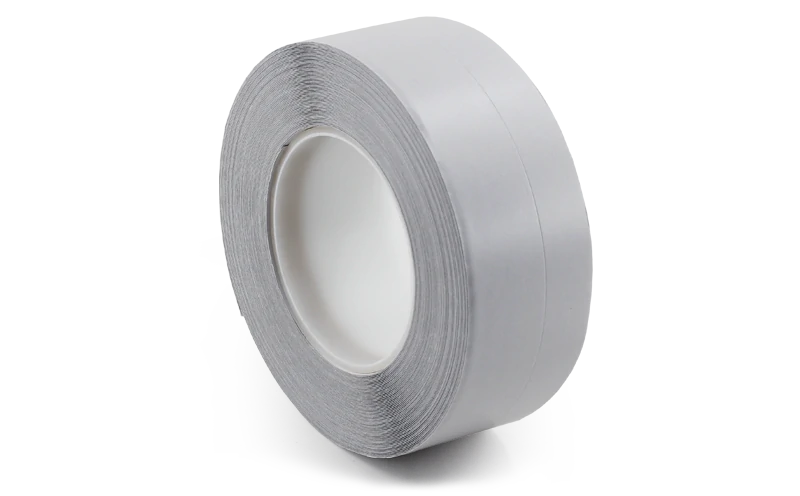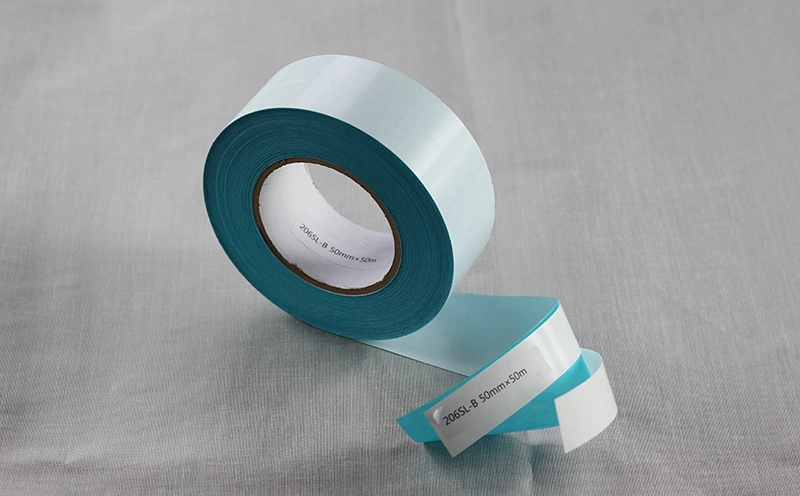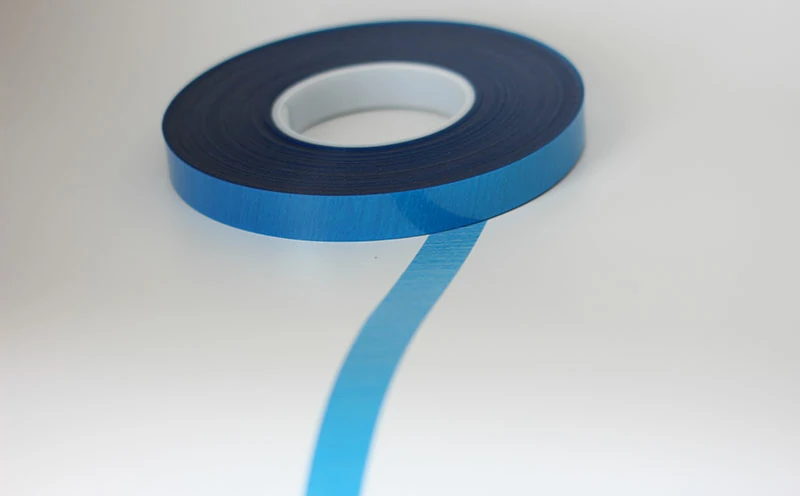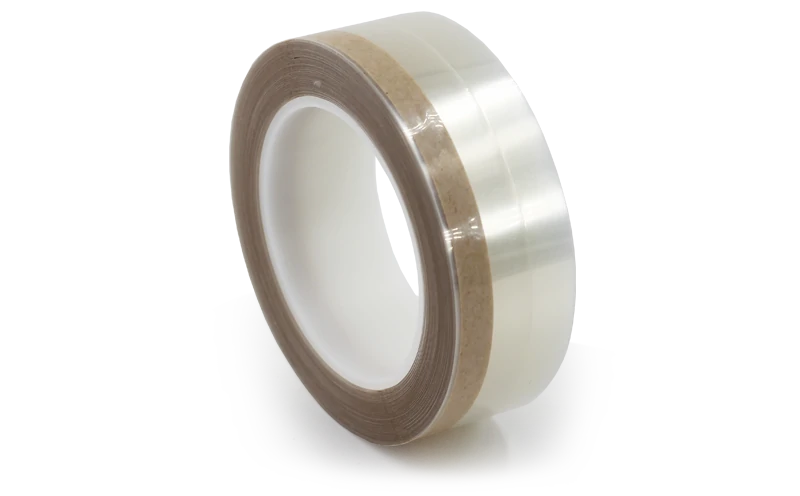
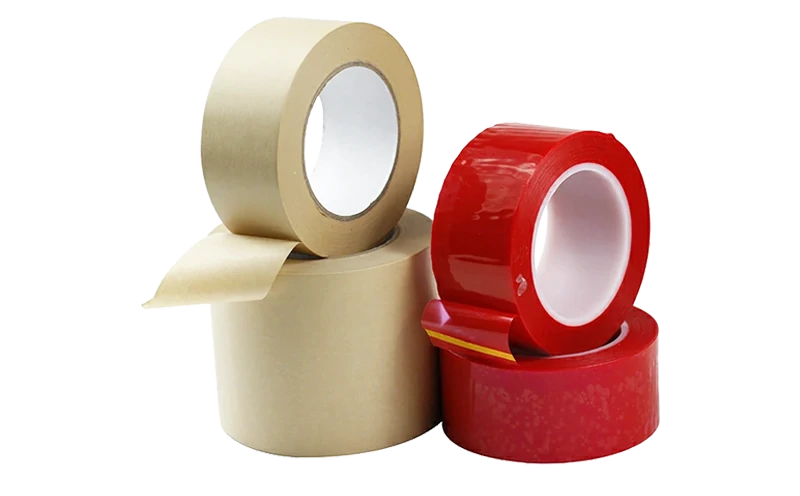
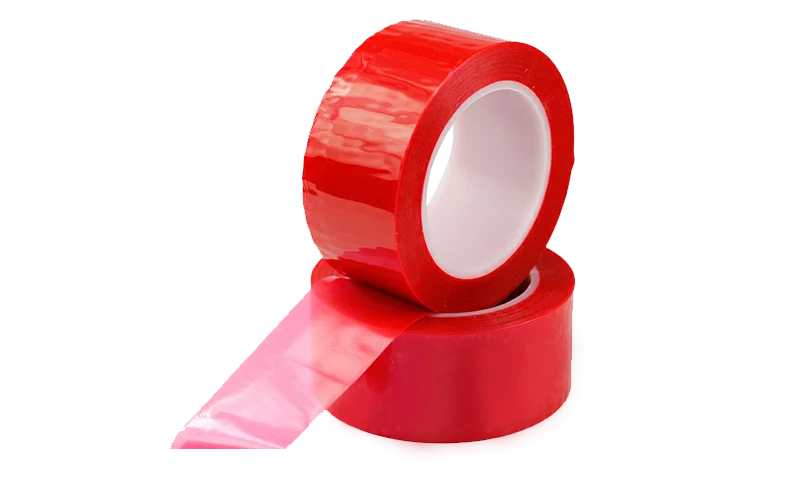
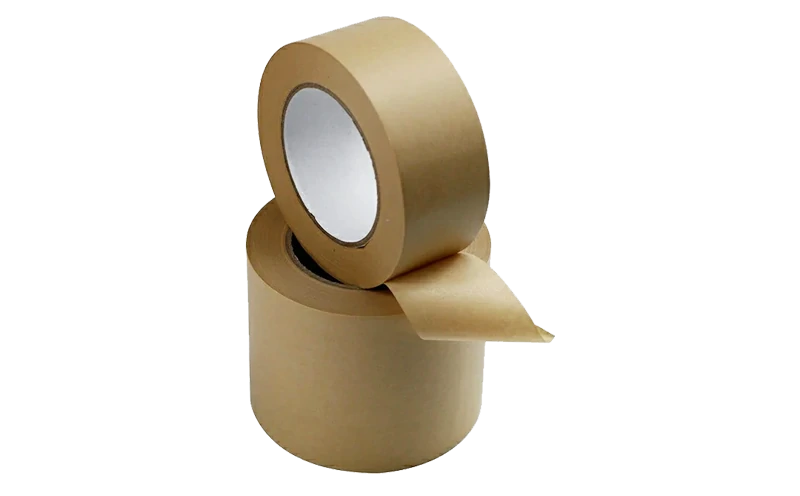
Leather splicing tape that used for polyvinyl chloride (PVC) Casting leather; for polyurethane (PU) synthetic leather; for semi-PU synthetic leather (PU/PVC combination synthetic leather).
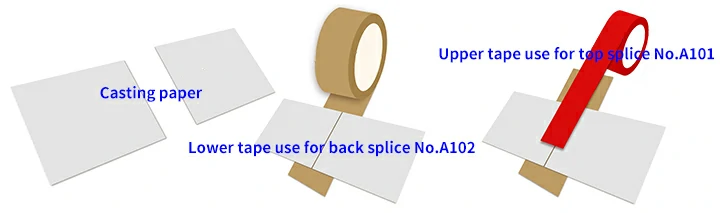
The specific application method of leather splicing tape in leather production: Use to Splice release paper, Use to splice casting paper. Release paper and Casting paper are used in the making of synthetic leather creating a full range of excellent embossing patterns. There are 2 tapes used for splicing Casting paper. Lower Tape Used for Back Splice, Upper Tape Used for Top Splice.
Upper Tape No.A101 is specifically engineered for top-side splicing directly on the active silicone-coated release surface of casting paper.
Lower Tape No.A102 serves as the heavy-duty back splice tape, applied to the non-release (back) side of casting and release papers to form a robust butt joint.
Tape Properties:
| Thickness | 0.085mm |
| Adhesion | 11 N/25mm |
| Tesile Strength | 57 N/cm |
| Elongation | 115% |
| Color | Red |
| Max Temperature | 220°C |
Tape Characteristic/Use:
Tape Properties:
| Thickness | 0.14mm |
| Adhesion | 9.8 N/25mm |
| Tesile Strength | 49N/cm |
| Elongation | 9% |
| Color | Brown |
| Max Temperature | 200°C |
Q1. Why are two different tapes needed for leather splicing?
A: Synthetic leather production uses casting paper with a non-stick release side and a standard paper back side. Upper Tape No.A101 uses a silicone adhesive with a release surface to stick to the active face, while Lower Tape No.A102 uses an acrylic adhesive on Kraft paper to secure the non-release side, ensuring a complete, dual-sided joint.
Q2. How many production cycles can Upper Tape No.A101 endure?
A: Upper Tape No.A101 is built for durability and can withstand 6 to 7 complete production cycles through curing ovens, allowing manufacturers to reuse spliced casting paper multiple times.
Q3. What types of synthetic leather production lines use this tape?
A: This splicing system is compatible with Polyvinyl Chloride (PVC) casting leather, Polyurethane (PU) synthetic leather, and Semi-PU (PU/PVC combination) synthetic leather manufacturing lines.
Q4. Does Upper Tape No.A101 affect the synthetic leather finish?
A: No. The top surface of No.A101 features a special release coating that prevents the liquid PU/PVC resin from sticking to the splice, allowing clean removal of the finished leather without damaging the embossing pattern.