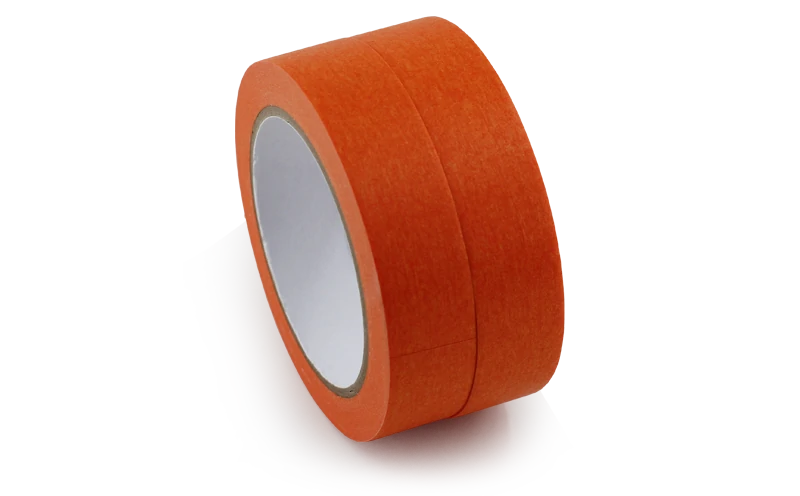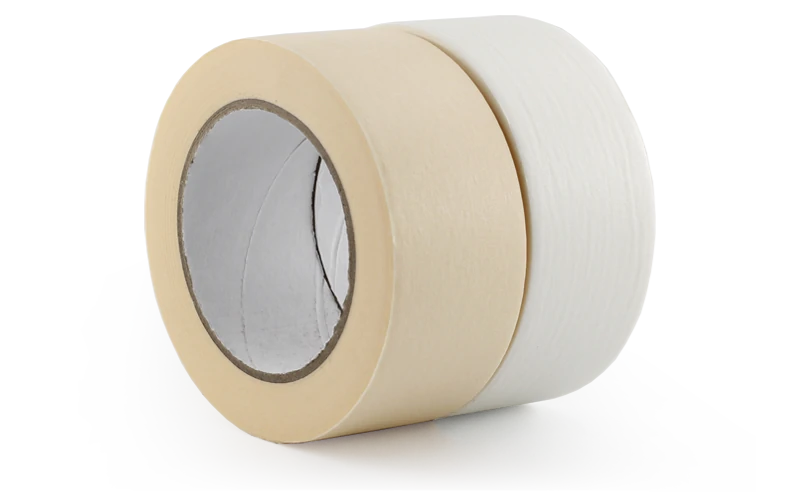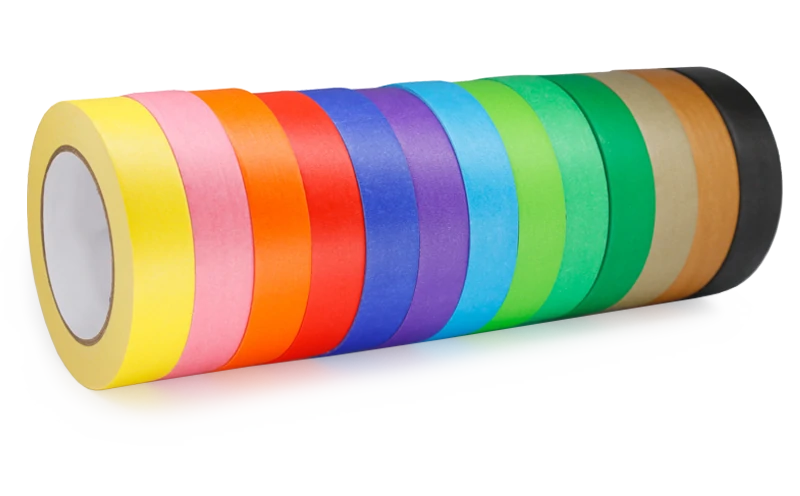
Masking tape can have a major impact on paint-line quality, surface protection, and finishing efficiency. While traditional crepe masking tape remains a practical choice for general-purpose painting, professional painters increasingly use Washi painters tape when precision, clean edges, and controlled removal are critical.
Washi tape combines a thin, smooth paper backing with pressure-sensitive adhesive technology. This low-profile construction can help create cleaner paint lines, reduce paint buildup along the masking edge, and conform to curves and detailed surfaces. However, Washi tape is not automatically the best choice for every job. The right tape depends on the substrate, paint system, temperature, masking duration, and required finish.
What Is Washi Painters Tape?
Washi painters tape is a masking tape that uses Washi paper as its backing. Made from long plant fibers, Washi paper provides a thin yet strong substrate that combines flexibility with controlled handling. When paired with a suitable pressure-sensitive acrylic adhesive, it provides a balance of adhesion, edge definition, conformability, and clean removal.
Washi Paper Backing and Adhesive Construction
The backing and adhesive work together to determine masking performance. A thin Washi backing can create a relatively flat edge against the surface, while its flexibility helps the tape follow curves and irregular contours without excessive wrinkling.
The adhesive must provide enough initial tack to keep the tape secure while allowing controlled removal afterward. Different Washi tape formulations can therefore be designed for different substrates, temperatures, exposure periods, and painting processes. Professional masking is about achieving controlled adhesion, not simply maximum adhesion.
What Makes Washi Tape Different from Crepe Tape?
The key difference is how the backing construction affects masking performance. Crepe tape is a versatile general-purpose solution, while Washi tape is particularly suitable for applications where precision matters.
Washi paper is naturally smooth, dense, and uniform, creating a relatively thin and consistent tape edge. This can help reduce paint buildup and support cleaner transitions between painted and protected areas. Crepe tape remains useful for broad, general-purpose masking where extreme precision is not required.
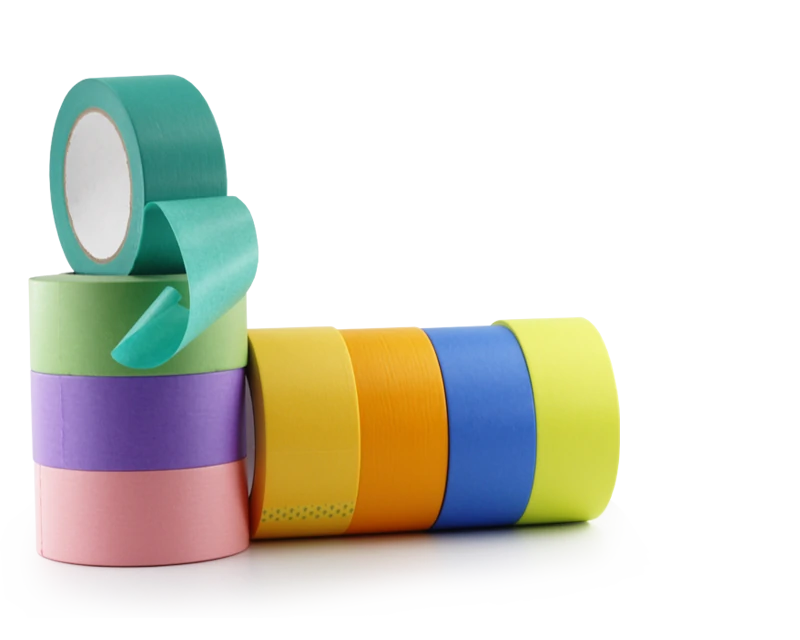
Washi Tape vs Masking Tape: Key Differences
When comparing Washi tape vs masking tape, professional users should evaluate the complete application rather than focusing only on the backing material.
Sharp Paint Lines
A thin, relatively flat tape edge can provide better control over the paint boundary. Because Washi tape can minimize heavy paint accumulation along the edge, it is well suited to decorative painting, trim work, multi-color applications, and automotive refinishing.
For applications where the finished edge is highly visible, Washi tape can function as an effective sharp edge painters tape solution.
Adhesion and Clean Removal
Professional masking tape needs sufficient adhesion to remain securely positioned during painting without becoming unnecessarily difficult to remove. Surface condition, paint curing, application temperature, and masking duration all affect removal performance.
Washi painters tape can provide a controlled balance between holding power and removability when the product is properly matched to the substrate and application.
Conformability for Curves and Details
Painting often involves curves, corners, trim, vehicle contours, and other irregular boundaries. The flexible Washi backing can follow these shapes while maintaining a controlled masking edge, making it particularly useful for detailed applications.
|
Performance Parameter |
Washi Painters Tape |
Standard Crepe Masking Tape |
|
Backing Thickness |
Ultra-Thin (Low Profile) |
Medium to Heavy (Crinkled) |
|
Paint Line Sharpness |
Superior (Zero Bleed / Sharp Edge) |
Moderate (Prone to Seepage) |
|
Conformability |
High (Smooth Curve & Detail Tracking) |
Moderate (Prone to Wrinkling) |
|
Thermal Resistance |
Up to 150°C (High-Bake Acrylics) |
Standard (60°C – 80°C Max) |
|
Clean Removal Window |
Extended (Up to 90+ Days) |
Short-Term (Typically 1 – 7 Days) |
|
Adhesive Residue Risk |
Minimal (Cohesive Acrylic Formulations) |
Higher (Rubber Adhesive Degradation) |
Why Professional Painters Choose Washi Tape for Precision Masking
Professional commercial painting contractors rely on Washi tape to streamline surface preparation, lower labor rework costs, and deliver consistent coat quality.
- Superior Edge Definition: The flat backing maintains a uniform contact line, ensuring razor-sharp separations between contrasting paint colors or sheen levels.
- Elimination of Paint Bleed: High-density fibers and flat acrylic adhesive coatings seal off capillary pathways, blocking solvent- and water-borne paints from creeping beneath the boundary.
- Residue-Free Clean Removal: Advanced acrylic adhesives release cleanly from cured coatings, glass, metal, and delicate interior substrates without leaving adhesive deposits behind.
- Reduced Rework Time: Sharp line performance on the first pass eliminates the need for manual razor touch-ups, edge scraping, or repainting damaged borders.
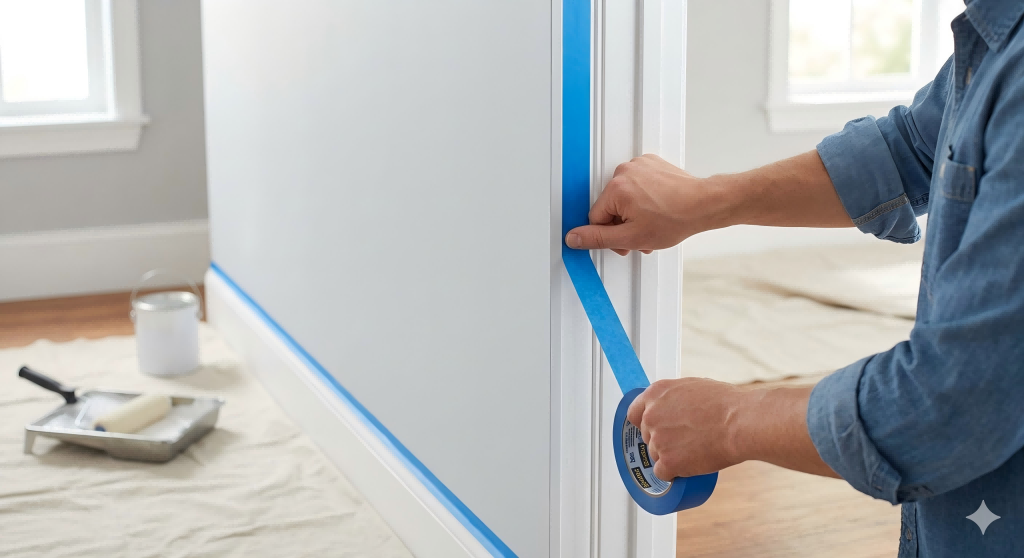
Why Automotive Professionals Use Automotive Washi Tape
Automotive refinishing demands precise masking around body contours, trim, glass, rubber components, seams, and other detailed areas. Automotive Washi tape is particularly useful when sharp paint boundaries and controlled removal are required.
Precision Masking for Automotive Paint Lines
Two-tone finishes, detailed bodywork, and trim masking all require accurate separation between painted and protected areas. A well-defined tape edge can help maintain consistent paint lines and reduce visible imperfections after curing.
Masking Curves, Trim, and Vehicle Details
Automotive surfaces contain numerous irregular shapes, including door handles, window trim, headlights, taillights, pillars, body contours, and rubber seals. A conformable Washi backing can make these areas easier to mask while maintaining a controlled edge.
Compatibility with Automotive Paint Processes
Automotive tape selection should account for paint chemistry, drying conditions, curing temperature, surface type, and masking duration. For spray-booth, infrared-drying, or bake-cycle applications, select a Washi tape specifically rated for the required temperature and exposure conditions.
What Is the Best Washi Tape for Automotive Painting?
There is no single best Washi tape for automotive painting because refinishing processes vary. The correct product should be selected according to the required paint-line precision, substrate, coating system, temperature, and masking duration.
When to Choose a Fine-Line Washi Tape
Fine-line Washi tape is appropriate when maximum paint-line precision is required, such as graphic layouts, racing stripes, custom artwork, and other detailed automotive finishes. Its thin edge can help minimize visible paint steps between different color layers.
When to Choose a High-Temperature Automotive Washi Tape
For elevated-temperature drying or curing, the tape must be rated for the actual process conditions. High-temperature automotive Washi tape can be suitable for professional spray booths, infrared drying, and controlled bake cycles when its documented temperature resistance matches the application.
Temperature rating should be considered together with exposure time and substrate conditions rather than used as the only selection criterion.
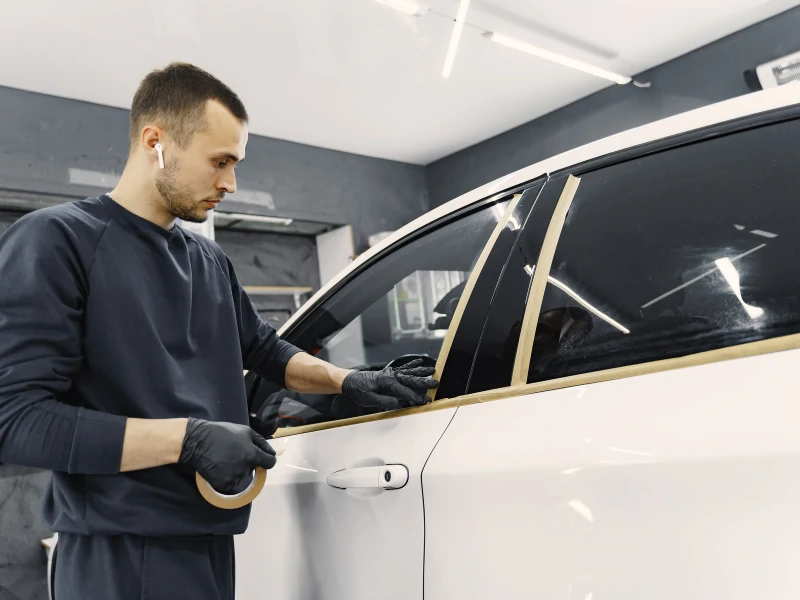
Washi Tape vs Crepe Tape: Which Should You Choose?
The right choice depends on the performance required from the masking system.
Choose Washi painters tape when:
- Sharp paint lines are important.
- Detailed or precision masking is required.
- Curves and irregular contours need to be followed.
- Automotive refinishing is involved.
- Edge definition is a priority.
- Controlled, clean removal is important.
Choose crepe masking tape when:
- General-purpose masking is sufficient.
- The project involves broad areas with less demanding edge requirements.
- The tape specification matches the substrate and painting process.
- Maximum precision is not necessary.
The practical conclusion is that Washi tape is not universally better than crepe tape. Washi is the stronger choice when precision and finishing quality are the priority, while crepe tape remains effective for many general masking applications.
How to Select Professional Washi Painters Tape
Choosing professional precision masking tape requires evaluating the complete application rather than focusing on one specification.
- Check the Backing Material: Consider the Washi paper grade, thickness, flexibility, and edge characteristics. A thin, conformable backing can be advantageous for detailed masking, while different applications may require different mechanical properties.
- Evaluate the Adhesive: Consider initial tack, holding power, surface compatibility, clean removal, and temperature resistance. Adhesive selection should match the substrate and required masking performance rather than simply prioritizing maximum adhesion.
- Match the Tape to the Painting Environment: Consider whether the tape will be used for interior painting, exterior painting, automotive refinishing, spray painting, or high-temperature curing. Exposure to UV, humidity, solvents, or elevated booth temperatures can require specialized tape formulations.
- Consider Masking Duration: Masking duration can affect removal performance. A tape designed for short-term use should not automatically be used for extended exposure, particularly under sunlight, heat, moisture, or aggressive coatings. Always follow the manufacturer's recommended application and removal period.
Common Mistakes When Choosing Washi Painters Tape
Selecting masking tape based only on price can increase overall project costs if poor edge definition, paint bleed, residue, or surface damage leads to rework.
It is also important to remember that Washi describes the backing material, not one universal adhesive formulation. Different Washi tapes can have substantially different adhesion, temperature resistance, removal characteristics, and intended applications.
Other common mistakes include ignoring substrate compatibility, using general-purpose tape in demanding automotive or high-temperature applications, and overlooking masking duration. Proper surface preparation is equally important: the tape should be applied to a clean, dry, and suitable surface.
Conclusion
Washi painters tape is particularly valuable when precision, edge definition, conformability, and controlled removal are critical. Its thin, smooth backing can help create cleaner paint lines and makes it well suited to detailed painting and automotive refinishing.
Crepe tape remains a practical choice for many general-purpose applications, so the decision should be based on the actual requirements of the job. Evaluate the substrate, paint system, temperature, masking duration, and required finish before selecting a tape.
For professional painters, the advantage of Washi tape is ultimately straightforward: when the quality of the paint line matters, precision masking can make the difference between an acceptable finish and a professional one.
SLAA provides Washi-based masking solutions for automotive refinishing, decorative painting, and other professional applications. Share your substrate, paint system, temperature, and masking requirements with SLAA to identify the appropriate Washi painters tape for your application.