Choosing the correct adhesive when detailing or repairing a vehicle can mean the difference between a professional, flawless finish and a costly mistake. While both products might appear similar, their performance, chemical properties, and intended applications are significantly different.
Using the wrong tape can lead to paint bleed, adhesive residue, uneven edges, or even paint damage. This guide explains the differences between automotive masking tape and painter’s tape, helping you select the right solution for professional-quality results.
Is Masking Tape the Same as Painters Tape?
The short answer is no. While all painter’s tape is technically a form of masking tape, not all masking tapes are suitable for painting—especially when working on vehicles.
- General Masking Tape: A broad category covering various adhesive strengths for general use.
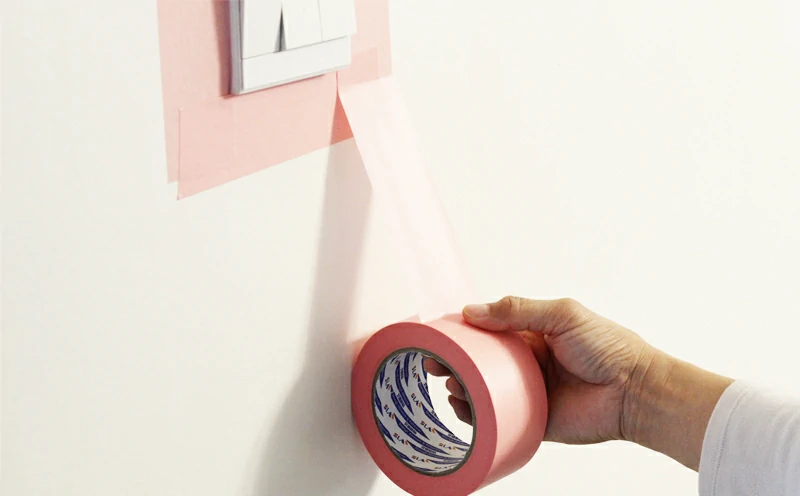
- Painter’s Tape: A refined version of masking tape designed for clean removal from walls, wood trim, drywall, and delicate household surfaces.
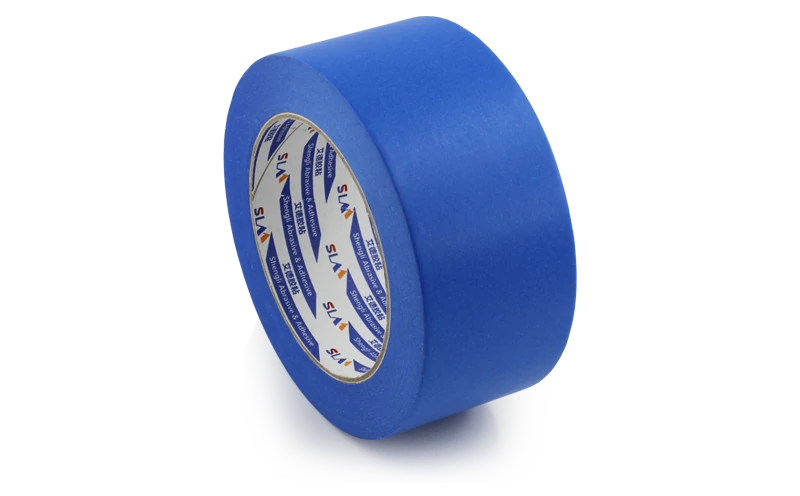
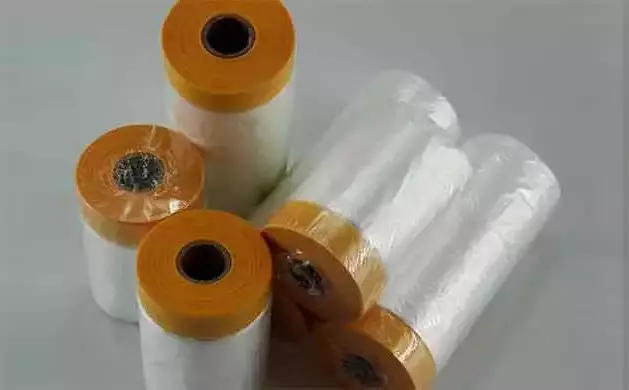
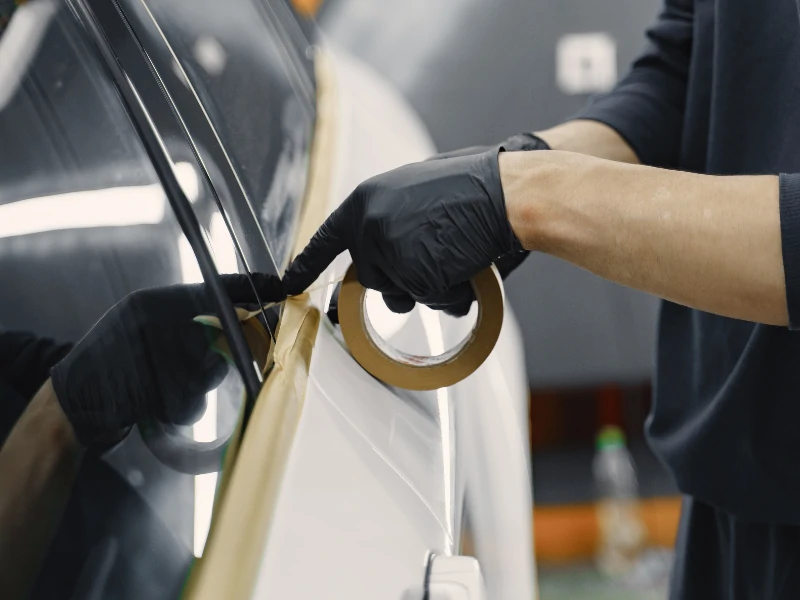
- Automotive Masking Tape: A highly specialized subset engineered to meet rigorous industrial performance standards. The tape is a specialized tape engineered specifically for vehicle painting, refinishing, detailing, and body repair applications. It is commonly manufactured from PVC film or high-performance crepe paper with automotive-grade adhesive systems.
 |
 |
Is Masking Tape Safe for Car Paint?
Whether masking tape is safe for car paint depends entirely on the type of tape you select.
Automotive Masking Tape: This is specifically designed to be safe for car surfaces. Professional versions, particularly PVC-based options, use natural rubber adhesives that peel away easily without leaving residue or damaging clear coats. High-quality automotive tapes can stay on a surface for up to 14 days and still provide a clean removal.
Standard Painter’s Tape: This is generally not recommended for professional vehicle work. It may fail when exposed to automotive paints, harsh clear coats, or high heat, leading to adhesive failure, paint bleed, or inconsistent edges.
Key Differences for Vehicle Projects
When applying masking tape for car paint, three factors separate automotive-grade products from standard household options.
1. Temperature and Chemical Resistance
Automotive environments are demanding, often involving heat from the sun or spray booth baking cycles, as well as exposure to solvents and thinners.
- Automotive Masking Tape: Engineered to withstand high temperatures and resist acids and solvents.
- Painters Tape: While some versions are UV-resistant to prevent "baking" onto a surface, they are rarely equipped to handle automotive-grade chemicals.
2. Conformability and Curves
Vehicles consist of complex, irregular shapes and tight curves.
- PVC Automotive Tape: Offers superior flexibility, allowing it to conform perfectly to the sharp contours of a car’s body without lifting.
- Standard Painters Tape: Frequently made of crepe paper, which can tear or lift when forced around sharp automotive curves.
3. Edge Quality (No-Bleed Performance)
Professional results require a "no-bleed" seal to ensure razor-sharp paint lines. High-performance automotive tapes use a smooth film carrier that prevents paint from seeping underneath, even on smooth plastic or aluminum surfaces.
Comparison Table: Feature Breakdown
| Feature | Automotive Masking Tape | Painter’s Tape |
| Primary Use |
Car painting & refinishing |
General painting |
| Heat Resistance |
High (Spray booth compatible) |
Low to moderate |
| Adhesion Strength |
Medium to high (controlled) |
Low to medium |
| Surface Compatibility |
Automotive paint, metal |
Walls, wood, drywall |
| Edge Precision |
Very high |
Moderate |
| Residue Risk |
Minimal (Auto-grade) |
Minimal (Indoor use) |
Size and Price Comparison
Automotive Masking Tape vs. Painters Tape Size
Automotive tape is available in precise, narrow widths—such as 6mm, 12mm, 18mm, and 24mm—to accommodate detailed masking and complex contours. In contrast, painter’s tape is typically wider (1", 1.5", or 2") because it is designed for covering large, straight surfaces like baseboards and wall trim.
Automotive Masking Tape vs. Painters Tape Price
The automotive masking tape price is generally higher due to the specialized adhesives and heat-resistant materials used in its construction. While painter's tape is more affordable for general-purpose use, using it on a vehicle often results in rework that costs more than the initial price difference.
When to Use Painters Tape on a Car?
You can use painters tape on car surfaces for very light, temporary tasks, such as quick touch-ups or low-risk masking areas. However, you should avoid it for full car painting, spray applications, or any high-temperature environment.
Pro Tips for Professional Results
- Clean the surface thoroughly before applying any tape to ensure proper adhesion.
- Press edges firmly after application to create a seal and prevent paint bleed.
- Remove tape at a 45° angle to achieve the cleanest line possible.
- Observe time limits and do not exceed the recommended application duration to prevent adhesive transfer.
Conclusion
The choice between automotive masking tape and painter's tape comes down to your specific application. For car painting and high-performance automotive tasks, always choose automotive masking tape to ensure clean lines, surface protection, and professional-quality results.