
Aluminum foil tape is a pressure-sensitive adhesive tape designed for sealing, joining, patching, and protecting surfaces in HVAC, insulation, refrigeration, and industrial applications. Its aluminum backing provides a reflective, moisture-resistant surface, while the adhesive bonds the tape to compatible substrates.
So, what is aluminum foil tape used for? Common applications include sealing HVAC ductwork, joining foil-faced insulation, securing heat-tracing cables, repairing damaged insulation facings, and protecting surfaces in industrial environments. However, performance varies according to the foil thickness, adhesive formulation, reinforcement, and operating conditions.
Understanding how aluminum foil tape works and how to select and apply it correctly helps ensure reliable sealing and long-term performance.

What Is Aluminum Foil Tape?
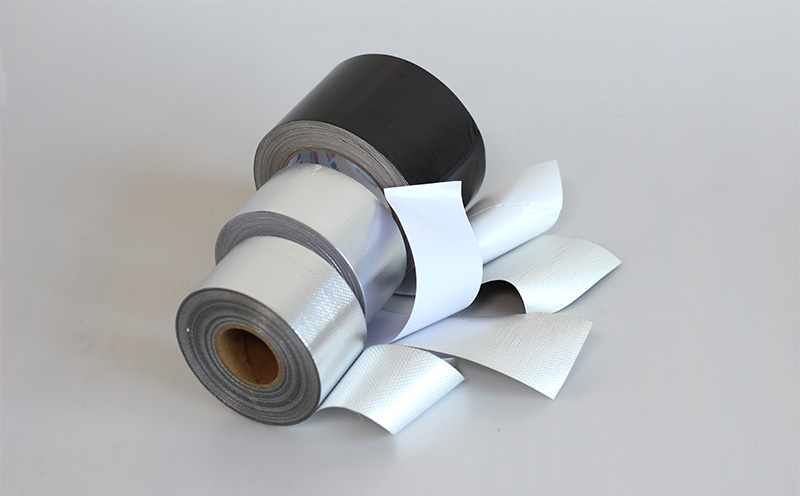
Aluminum foil tape consists primarily of an aluminum foil backing and a pressure-sensitive adhesive. Depending on the product, it may also include a release liner or reinforcement layer for easier application or increased strength.
The aluminum backing provides reflectivity, flexibility, and resistance to moisture, while the adhesive determines bonding strength, temperature performance, and compatibility with different surfaces. Acrylic and rubber-based adhesives, for example, offer different combinations of initial tack, temperature resistance, and aging performance.
Aluminum Foil Tape Construction
- Foil Backing: Typically consists of soft or dead-soft pure aluminum ranging from 30 to 50 microns in thickness, providing high tensile strength and puncture resistance while conforming smoothly to three-dimensional contours. Thinner foil generally conforms more easily to curved surfaces and irregular joints, while thicker foil can offer greater resistance to tearing and mechanical damage.
- Adhesive Systems: Solvent acrylic adhesives offer exceptional thermal stability and long-term aging resistance, whereas synthetic rubber formulations deliver rapid initial tack on cold or demanding surfaces. Some products use a silicone-coated release liner, while linerless versions support faster application.
- Reinforced Structures: For applications subjected to heavy mechanical stress, reinforced aluminum foil tape incorporates a fiberglass scrim or mesh layer for extra tear resistance.
For applications requiring additional mechanical strength, reinforced aluminum foil tape incorporates scrim or another reinforcement layer into its construction.
How Does Foil Tape Work?
When aluminum foil tape is pressed against a clean, compatible surface, application pressure activates the pressure-sensitive adhesive to establish intimate contact with the substrate. The dense aluminum backing creates an impermeable physical barrier that halts liquid water, moisture vapor, air leakage, and gas transmission.
In HVAC and insulation systems, this continuous seal prevents conditioned air loss and preserves the performance of thermal insulation facings. Achieving a dependable bond depends heavily on proper surface preparation, correct adhesive selection, and adequate application pressure.
What Is Aluminum Foil Tape Used For?
Aluminum foil tape serves several practical purposes across building services, insulation installation, equipment maintenance, and industrial manufacturing. The right product should be selected according to the application and expected environmental exposure.
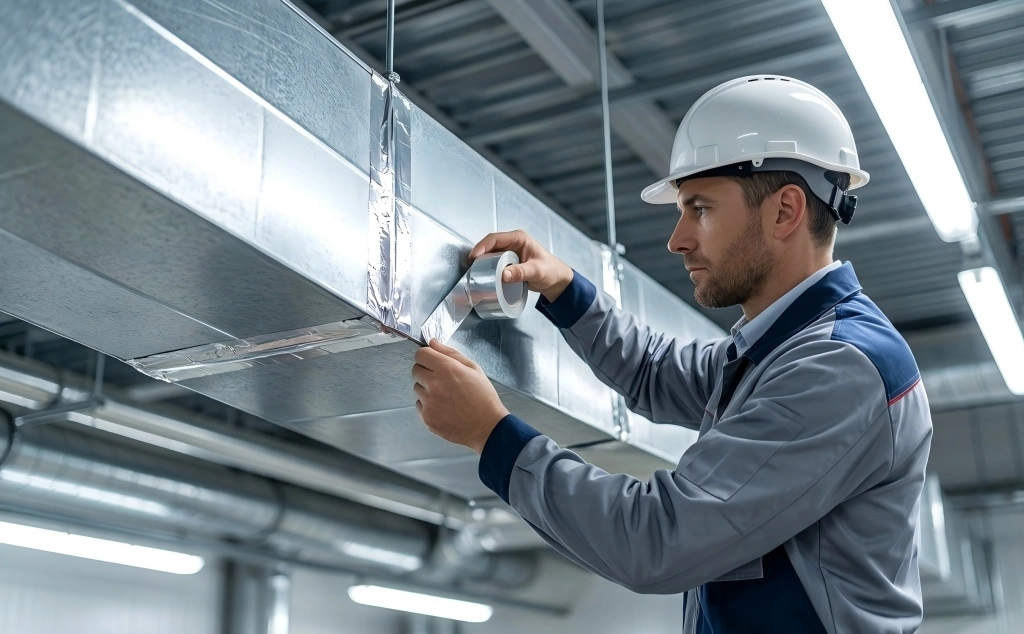
Sealing HVAC Ductwork
Aluminum foil tape for ductwork is commonly used to seal compatible duct seams, joints, and connections. Properly selected HVAC aluminum foil tape can help reduce air leakage and maintain the integrity of duct sealing systems.
It is also used with rigid and flexible duct insulation to seal joints in foil-faced materials. For reliable results, installers should check the tape's adhesive compatibility, service temperature, and suitability for the specific duct material. Where required, the tape should meet the applicable HVAC system specifications and installation standards.
Sealing and Protecting Insulation
Aluminium foil tape for insulation is widely used to seal seams and joints in foil-faced fiberglass, mineral wool, and other compatible insulation systems. It can help maintain a continuous facing, cover exposed joints, and repair minor damage to reflective insulation surfaces.
When correctly installed, foil tape can also help preserve the continuity of a vapor-control layer. The tape must be compatible with the insulation facing and suitable for the expected temperature and humidity conditions; it should not be assumed to replace the insulation system's other sealing components.
Commercial Refrigeration and Heat Tracing
In commercial refrigeration and cold-storage equipment, aluminum foil tape may be used to secure compatible insulation materials or help maintain contact between components where the system design permits. Its thin metal backing can support heat transfer across a bonded interface, depending on the application.
For industrial heat-tracing systems, certain foil tapes can help secure heating cables to compatible pipe surfaces or support heat distribution as specified by the system manufacturer. Because these applications can involve significant temperature variations, the adhesive's service-temperature range and compatibility with the substrate must be checked before installation.
Patching and Repairing Foil-Faced Materials
Tears, punctures, and separated seams in foil-faced insulation or reflective barriers can compromise the continuity of the surface. Aluminum foil tape provides a practical way to patch minor damage without replacing an entire section of material.
For a durable repair, remove loose material, clean and dry the surface, and apply tape that extends beyond the damaged area sufficiently to establish a secure bond. Larger areas of damage or insulation performance problems may require a more comprehensive repair.
Reflective and Thermal Applications
Aluminum foil has a reflective surface that can be useful in thermal-management applications, including compatible insulation systems and equipment assemblies. Foil tape can help maintain the continuity of a reflective facing or cover exposed joints where the design calls for a reflective barrier.
However, the backing alone does not determine the thermal performance of the finished assembly. Adhesive temperature limits, surface conditions, installation quality, and the surrounding insulation system all affect suitability.
General Industrial and Construction Applications
Beyond HVAC and insulation, aluminum foil tape is used for sealing metal joints, patching compatible materials, protecting surfaces, and maintaining reflective or moisture-resistant coverings. Specialized products may also be suitable for equipment manufacturing and other industrial maintenance tasks.
For applications involving high temperatures, outdoor exposure, or fire-rated assemblies, verify the product's tested performance and relevant approvals rather than assuming all aluminum foil tapes provide the same level of protection.
Why Is Aluminum Foil Tape Used for HVAC and Insulation?
Aluminum foil tape combines a functional metal backing with an adhesive designed for specific service conditions. This construction makes it useful for sealing and maintaining insulation systems where ordinary paper or plastic tapes may not provide the required properties.
Moisture and Vapor Resistance
Aluminum foil is nonporous, making it suitable for applications requiring a moisture-resistant surface. When compatible tape is properly applied across insulation joints, it can help maintain the continuity of a vapor-control layer and reduce moisture entry through exposed seams.
The overall result still depends on correct installation and the performance of the complete insulation system.
Heat and Temperature Resistance
The aluminum backing can tolerate temperatures that would be unsuitable for some conventional tape backings, but the adhesive often determines the practical service-temperature range. High-temperature applications therefore require a product specifically rated for the expected operating conditions.
Always consult the manufacturer's technical data rather than assuming all foil tapes have the same temperature resistance.
Flexibility and Conformability
Thin aluminum foil can conform to many corners, joints, and moderately irregular surfaces, allowing installers to cover seams without using a rigid sealing material. Foil thickness and temper affect how easily the tape can be shaped and how well it resists tearing during application.
Reflective Surface
The metallic surface can help maintain the reflective properties of foil-faced insulation and other systems designed to manage radiant heat. Actual thermal performance depends on the complete assembly and installation conditions, not simply the presence of aluminum foil tape.
Durable Sealing and Surface Protection
With a suitable adhesive and correct installation, aluminum foil tape can provide lasting adhesion and surface protection. Depending on the formulation, products may be designed to withstand humidity, UV exposure, temperature cycling, or other environmental stresses. These capabilities should be verified against the product's specifications.
Step-by-Step Guide: How to Use Aluminum Foil Tape
Achieving a durable, long-lasting seal requires correct surface preparation and application techniques:
- Clean and Dry the Substrate: Remove all dust, grease, oil, rust, and moisture from the application surface using a suitable solvent cleaner and a clean cloth, as contamination prevents proper adhesive bonding.
- Measure and Cut the Tape: Unroll the required length of tape, allowing a 2-inch (50 mm) overlap beyond the edges of the seam or repair area, and cut it cleanly with a utility knife or shears.
- Peel and Position: Align the tape centered directly over the joint, peeling back the release liner gradually while pressing the exposed adhesive lightly onto the surface.
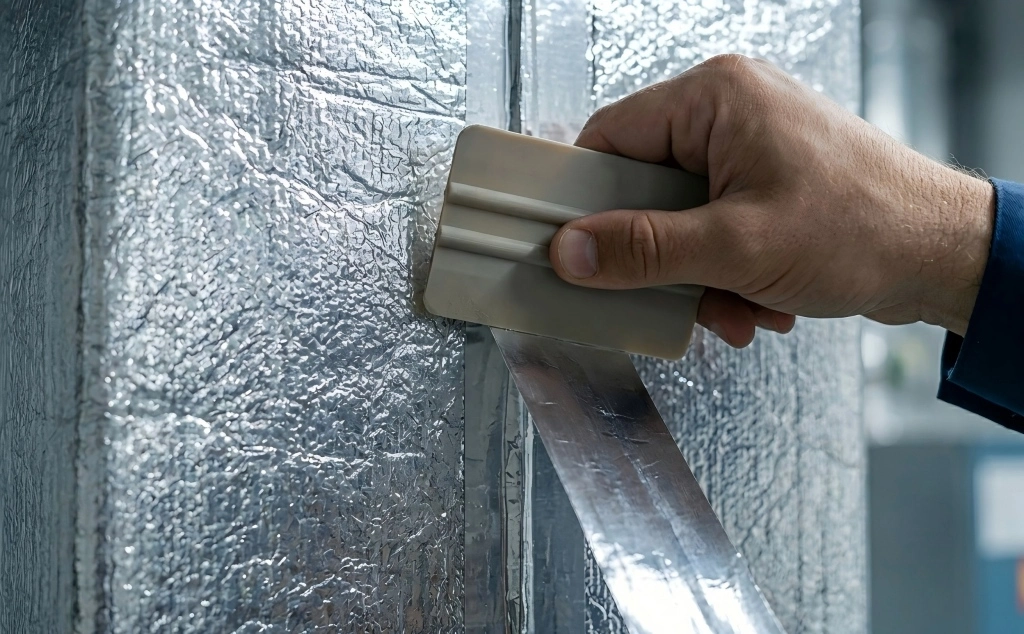
- Firmly Burnish the Surface: Apply firm, uniform pressure along the entire length of the tape using a plastic squeegee or burnishing tool to smooth out wrinkles, eliminate air bubbles, and force the adhesive into full microscopic contact with the substrate.
- Inspect the Edges: Check all outer tape perimeters to ensure complete edge adhesion without gaps, channel leaks, or edge lifting.
How to Choose the Right Aluminum Foil Tape
Selecting foil tape based on appearance or price alone can lead to poor results. Consider the following factors before choosing a product.
Consider the Application
Identify the tape's primary function, whether sealing HVAC ductwork, joining insulation, repairing foil facings, or supporting a heat-tracing installation. Different applications may require different adhesive systems, backing thicknesses, or reinforced constructions.
Check the Adhesive Type
Acrylic and rubber-based adhesives offer different performance characteristics. Consider initial tack, long-term adhesion, temperature resistance, aging, and compatibility with the substrate. The right choice depends on the installation environment and expected service life.
Check Foil Thickness and Tape Construction
Thinner foil may be easier to apply around curves and irregular surfaces, while thicker foil can provide additional resistance to tearing. Reinforced aluminum foil tape may be appropriate when the application requires greater mechanical strength or dimensional stability.
Check Temperature and Environmental Requirements
Determine whether the tape will be used indoors or outdoors and whether it will encounter high or low temperatures, humidity, moisture, UV exposure, or temperature cycling. Confirm the manufacturer's specified service-temperature range and environmental performance before purchasing.
Common Mistakes When Using Aluminum Foil Tape
Several common mistakes can reduce adhesion and compromise the finished seal. Applying tape to a dirty or damp surface prevents effective adhesive contact, while choosing a product without checking its temperature rating can lead to premature bond failure.
Excessive stretching during application may cause the foil to tear or lift at the edges. Wrinkles, trapped air, and insufficient pressure can also create weak points, particularly around seams and corners. Inadequate overlap may leave parts of a joint exposed, so installers should follow the product's recommended application method.
Finally, aluminum foil tape should not be treated as a substitute for properly designed insulation, mechanical fastening, or an engineered sealing system when those components are required.
Conclusion
Aluminum foil tape is used for sealing HVAC ductwork, joining and protecting insulation, supporting selected refrigeration and heat-tracing applications, repairing foil-faced materials, and maintaining reflective surfaces. Its combination of aluminum backing and pressure-sensitive adhesive makes it a versatile solution for many construction and industrial tasks.
To achieve reliable performance, match the tape's adhesive, foil thickness, reinforcement, and temperature rating to the application. Proper surface preparation and consistent application pressure are equally important for maintaining a durable seal.
SLAA supplies aluminum foil tape solutions for HVAC, insulation, construction, and industrial applications, with different backing and adhesive constructions to meet varying requirements. Contact SLAA to discuss the right aluminum foil tape for your application.


